The Role of Environmental Education in Guided Tours
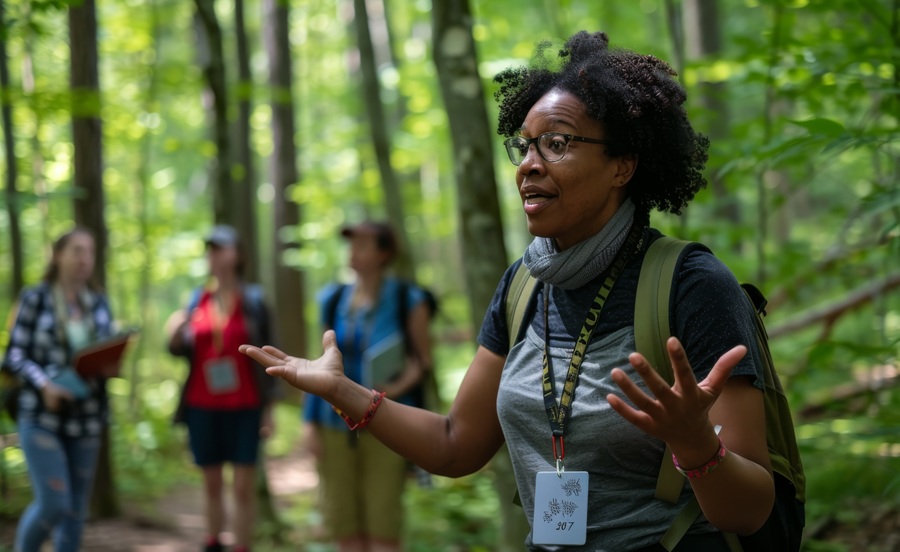
A guided tour should do more than move people from one interesting place to another.
That is part of it, of course. Folks want to see the scenery, take pictures, spot wildlife, hear a few good stories, and go home with something better than another refrigerator magnet. But a good tour should also help people understand what they are looking at.
That is where environmental education comes in.
In Louisiana, the environment is not background decoration. It is part of the story. The water, trees, marsh grass, birds, alligators, mud, humidity, and mosquitoes all play their roles. Some play them more aggressively than others, especially the mosquitoes.
When visitors take a guided tour through a swamp, bayou, marsh, or wetland area, they are not just looking at pretty scenery. They are seeing a living system. Every cypress tree, waterway, bird call, and ripple in the water is connected to something larger.
Environmental education helps make those connections clear.
A visitor may see a cypress tree and think it looks beautiful, which it does. But when a guide explains how cypress trees grow in wet conditions, provide habitat, help stabilize the area, and contribute to the character of the swamp, that tree becomes more than a photo opportunity. It becomes part of the ecosystem.
The same thing happens with wildlife.
Most people get excited when they see an alligator. That is understandable. An alligator has a way of getting attention. It does not need a marketing department. It just floats there with two eyes above the water and lets everyone know who has seniority.
But environmental education helps visitors understand that alligators are not just swamp celebrities. They are part of the balance of the habitat. They affect other species, use certain nesting areas, respond to temperature changes, and behave differently depending on the season. Understanding that helps visitors respect the animal instead of seeing it only as something dramatic to photograph.
Birds, turtles, fish, snakes, insects, and plants all have their place too. A guide can explain how each one fits into the environment in a way that is easy to understand. The goal is not to turn the tour into a science lecture. Nobody signed up to feel like there will be a quiz at the end. The goal is to make the scenery make sense.
Water is one of the biggest parts of the story in South Louisiana.
The rivers, bayous, canals, lakes, and wetlands shape how people live here. Water affects transportation, food, jobs, storms, drainage, fishing, boating, and local culture. In many places, the land and water are so connected that trying to separate them is almost impossible.
A guided tour gives visitors a chance to see that relationship up close.
They can see how water moves, how land changes, how plant life grows along the edges, and how wildlife depends on those conditions. A guide can explain how rain, tides, storms, and seasons all change the look and behavior of the landscape.
That kind of education matters because Louisiana’s environment is always changing.
Wetlands are active systems. They are not still postcards. They respond to weather, water levels, erosion, saltwater, storms, and human activity. A place that looks one way in spring may look different in late summer. Bird activity changes. Plant growth changes. Water levels change. Even animal behavior changes.
A tour can help visitors understand why.
Environmental education also helps explain conservation issues without overwhelming people. Topics like coastal land loss, erosion, saltwater intrusion, storm damage, invasive species, and pollution can sound complicated, and they are. But when someone is standing in the middle of the environment, those issues become easier to understand.
Seeing a shoreline, a marsh, a canal, or a stand of trees makes the conversation more real.
That does not mean every tour needs to become a doom-and-gloom presentation. People came to experience Louisiana, not leave feeling like they need to go home and stare sadly out a window. But honest, simple explanations can help visitors understand why these places matter and why protecting them is important.
Environmental education also supports responsible tourism.
When people understand an environment, they are more likely to respect it. They learn why feeding wildlife is not a good idea. They understand why litter matters. They see why boats should move carefully through certain areas. They begin to understand that the swamp is not a theme park. It is a home for living things.
That respect is important.
Louisiana’s natural spaces are beautiful, but they are also sensitive. A small action may not seem like much, but repeated over time by many people, it can create problems. Good tour education helps visitors enjoy the experience while also treating the environment properly.
Another important part of guided tours is connecting the environment to local culture.
In Louisiana, food, music, architecture, fishing, boating, storytelling, and even the way communities developed are tied to the land and water. Environmental education helps visitors understand that the culture did not appear out of nowhere. It grew from the place itself.
The bayous, marshes, rivers, and wetlands shaped how people traveled, worked, ate, built, and survived.
That connection is one reason guided tours are so valuable. They allow visitors to see Louisiana as more than a destination. They help people understand it as a living place with history, movement, challenges, and character.
At Louisiana Tour Company in New Orleans, environmental education is part of creating a meaningful experience. The scenery gets people’s attention. The stories hold their interest. The education gives the experience depth.
A good tour should leave people with more than pictures.
It should leave them with a better understanding of what they saw, why it matters, and how everything fits together.
And if they also leave with a healthy respect for alligators and a personal grudge against mosquitoes, that is just part of the Louisiana experience.