Why Swamps Support So Many Different Animal Species
One of the questions I hear all the time during swamp tours is, “How can so many different animals live out here?”
It’s a fair question.
At first glance, a swamp might look like a bunch of trees standing in muddy water. To someone seeing one for the first time, it can seem quiet—even a little mysterious.
Then the longer the boat sits still, the more life starts to appear.
- A great blue heron glides overhead.
- A turtle slips off a log.
- A dragonfly lands nearby.
- A fish breaks the surface.
Somewhere off in the distance, an alligator decides to remind everyone who’s really in charge.
Suddenly, what looked empty turns into one of the busiest neighborhoods in Louisiana.
That’s because swamps aren’t just places where animals happen to live. They’re ecosystems designed to support an incredible variety of life.
One of the biggest reasons is the water itself. Water is life, and swamps have plenty of it.
Some areas have shallow pools, others have deep bayous, slow-moving canals, hidden ponds, and flooded forests. Every type of water creates slightly different living conditions, which means different species find places that fit their needs.
- Some fish prefer deeper channels.
- Frogs like shallow areas.
- Turtles enjoy sunny logs.
- Alligators seem perfectly happy almost anywhere.
The variety of habitats packed into one swamp is remarkable.
Then there are the trees.
Most visitors immediately notice the bald cypress trees with their towering trunks and unusual knees sticking up from the water.
Those trees do much more than create beautiful scenery.
- Birds nest in them.
- Owls rest in them.
- Squirrels travel through them.
- Insects feed on them.
Their roots provide shelter for fish and countless smaller creatures.
Even after a tree falls, it keeps contributing to the ecosystem.
A fallen log quickly becomes an apartment complex for turtles, insects, crawfish, fish, snakes, and plenty of other wildlife.
Nothing goes to waste in a swamp.
Speaking of insects, they deserve a little more credit than they usually receive.
Now, before anyone gets excited, I’m not talking about mosquitoes. Mosquitoes have somehow managed to become Louisiana’s unofficial state bird.
I’m talking about dragonflies, butterflies, beetles, bees, and hundreds of other insects that pollinate plants or provide food for birds, fish, frogs, reptiles, and mammals.
Without insects, the swamp food chain would have a difficult time functioning.
Nature may not always look organized, but there’s an impressive amount of teamwork happening.
Another reason wildlife thrives is because food is everywhere.
Plants grow quickly thanks to warm temperatures and abundant water.
- Those plants feed insects and herbivores.
- Smaller animals feed larger animals.
- Predators help keep populations balanced.
Every species plays a role.
Even the alligator has responsibilities beyond being the swamp’s celebrity.
Alligators are often called apex predators, but they’re also ecosystem engineers. During dry periods, they create shallow depressions called alligator holes that hold water longer than surrounding areas.
Those pockets of water become temporary homes for fish, turtles, frogs, and countless other species waiting for seasonal rains to return.
It’s another example of how one species can influence many others.
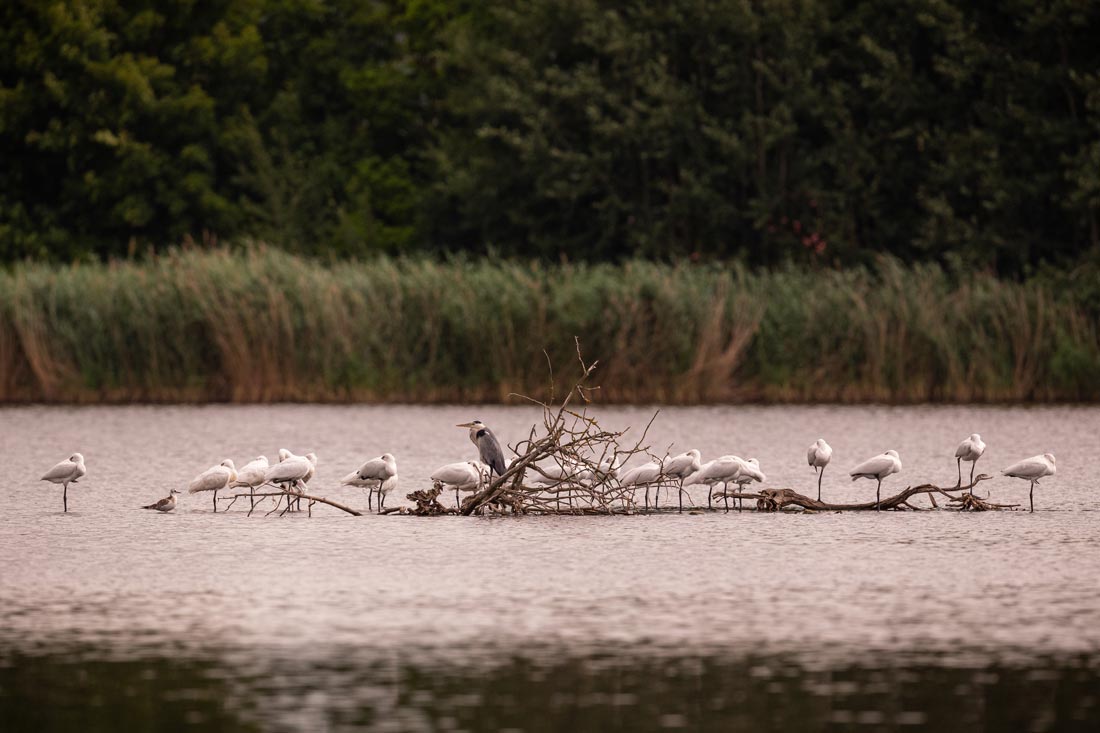
Bird lovers also appreciate Louisiana’s swamps because there always seems to be something flying overhead.
- Herons.
- Egrets.
- Ibises.
- Roseate spoonbills.
- Ospreys.
- Bald eagles.
- Wood ducks.
- Kingfishers.
The list goes on.
Some birds stay year-round while others arrive during migration.
Depending on the season, the same swamp can look completely different from one month to the next.
The changing seasons create fresh opportunities for wildlife without dramatically changing the environment itself.
One thing I enjoy pointing out during tours is that animals aren’t randomly scattered around the swamp.
They’re usually exactly where conditions suit them best.
- A basking turtle chooses a sunny log.
- A heron patiently waits where fish are feeding.
- An alligator finds calm water with easy access to deeper channels.
Nature has been organizing real estate long before humans started buying property.
Louisiana’s climate also plays a major role.
Compared to colder regions, the Gulf Coast enjoys a long growing season.
Plants remain productive for much of the year. Food stays available longer.
Many species don’t have to deal with months of frozen conditions. That allows wildlife populations to remain active across multiple seasons.
Of course, weather still changes things.
Heavy rainfall can flood new areas. Water levels rise and fall.
Fish move. Birds relocate.
Even alligators adjust their behavior based on changing conditions.
The swamp is constantly changing, but somehow everything keeps finding its place.
One thing that surprises many visitors is how connected everything really is.
Remove enough insects, and bird populations change. Lose aquatic vegetation, and fish habitat declines.
Damage wetlands, and mammals, reptiles, amphibians, and birds all feel the effects.
It’s like pulling threads from a woven blanket.
Eventually the entire fabric begins to weaken.
That’s one reason Louisiana’s wetlands are so important.
They’re not simply beautiful places to visit.
They filter water.
- Reduce flooding.
- Support fisheries.
- Protect shorelines.
- Provide habitat for countless species.
They perform jobs that benefit both wildlife and people.
After spending years exploring these waterways, one lesson becomes clear every time another tour heads into the swamp.
There’s always something new to discover.
The same bayou can look completely different depending on the weather, the season, the water level, or even the time of day.
An alligator might be sunning on one trip and nowhere to be found on the next.
A flock of egrets may suddenly appear where there was nothing just minutes earlier.
That’s part of what makes Louisiana’s swamps so fascinating.
At Louisiana Tour Company, every trip into the wetlands offers an opportunity to better understand how these ecosystems work. Each animal, tree, insect, and waterway contributes to a much larger picture that’s been developing for thousands of years. The more time spent observing the swamp, the easier it becomes to appreciate just how interconnected everything really is.
And yes, before anyone asks, the alligators usually seem just as curious about the people on the boat as the people are about them. Fortunately, they tend to be much better at posing for photographs than asking for autographs.