How Swamp Tourism Helps Showcase Louisiana Culture And Nature
When people think about Louisiana, a few things usually come to mind pretty quickly.
- Great food.
- Great music.
- Historic architecture.
- Festivals.
And somewhere near the top of that list, alligators.
Lots and lots of alligators.
The truth is that Louisiana’s swamps have become one of the most recognizable symbols of the state. Visitors travel from around the country and around the world to experience landscapes that simply do not exist in most other places. Towering cypress trees, winding bayous, Spanish moss hanging from ancient branches, and wildlife around nearly every turn create an environment that feels completely different from the modern world.
What many visitors discover, however, is that swamp tourism is about much more than spotting an alligator.
The swamps tell the story of Louisiana.
In many ways, they help explain why the state developed into the unique place it is today.
Louisiana’s wetlands have influenced transportation, commerce, food, culture, architecture, recreation, and daily life for generations. Long before highways connected communities, waterways served as important routes for travel and trade. Entire communities developed around the bayous, rivers, marshes, and swamps that shaped life throughout South Louisiana.
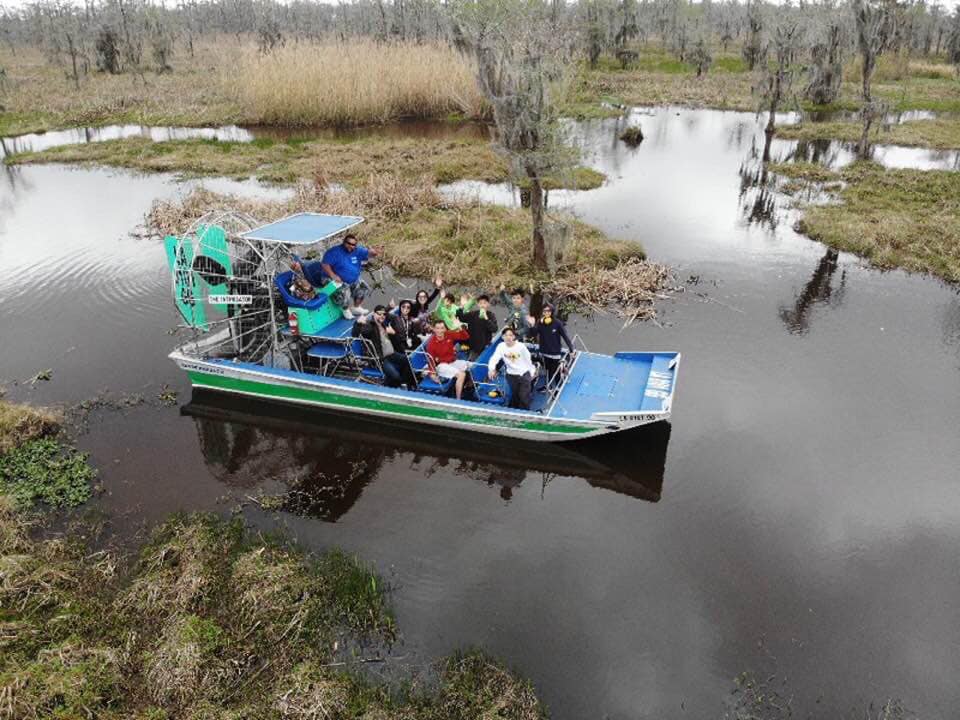
A swamp tour allows visitors to see those environments firsthand.
That experience creates a level of appreciation that photographs and videos simply cannot match.
There is something different about gliding through a quiet bayou and seeing a landscape that has remained largely unchanged for generations.
- The sounds are different.
- The pace is different.
- Even the air feels different.
For many visitors, it is the first opportunity to truly disconnect from the constant activity of everyday life.
- Cell phones become less important.
- Email becomes less important.
- Traffic becomes less important.
The only thing that seems important is what might be waiting around the next bend in the waterway.
- Sometimes that is a great blue heron.
- Sometimes it is a turtle sunning itself on a log.
- Sometimes it is an alligator that appears surprisingly comfortable with the attention.
One of the most valuable aspects of swamp tourism is education.
Many visitors arrive knowing very little about Louisiana’s coastal environment. They may have heard the words “bayou” and “wetlands,” but they may not fully understand the role those environments play.
Louisiana’s wetlands serve as critical habitats for countless species of wildlife. They also help support fisheries, improve water quality, and provide important protection against storm impacts.
The environmental importance of these ecosystems becomes much easier to understand when standing in the middle of them.
- A classroom can explain wetlands.
- A swamp can demonstrate them.
That distinction matters.
Wildlife observation is another major part of the experience.
Louisiana’s swamps support an incredible variety of animals. Alligators often receive most of the attention, but they are only one piece of a much larger ecosystem.
Birds, fish, turtles, snakes, raccoons, nutria, frogs, and countless other species all play important roles within the environment.
One of the things that makes every swamp tour unique is that no two trips are exactly alike.
Wildlife follows its own schedule.
The animals have apparently never agreed to coordinate their appearances with tour departure times.
Some days may feature numerous alligator sightings. Other days may showcase a variety of birds and other wildlife.
That unpredictability is part of what makes the experience authentic.
The swamps are not a theme park. They are living ecosystems.
Swamp tourism also provides a valuable opportunity to share Louisiana’s cultural heritage.
The history of South Louisiana is deeply connected to the waterways that flow throughout the region. Generations of families built their lives around fishing, trapping, hunting, boat building, and other occupations tied directly to the wetlands.
Many traditions that remain part of Louisiana culture today developed because of those environments.
The food, language, stories, and customs associated with Cajun and Creole communities were shaped in part by life along the bayous and waterways.
Understanding the landscape helps people better understand the culture.
That connection often surprises visitors.
Many arrive expecting a wildlife tour and leave with a deeper appreciation for Louisiana’s history as well.
Photography is another reason swamp tourism continues to attract interest.
Louisiana’s wetlands offer some of the most distinctive scenery in the country.
- Morning fog drifting across the water.
- Sunlight filtering through cypress trees.
- Reflections stretching across calm bayous.
Wildlife appearing unexpectedly along the shoreline.
The scenery changes throughout the year, creating different experiences during every season.
For photographers, it is almost impossible to take the same picture twice.
Even standing in the same location can produce completely different results depending on lighting, weather, wildlife activity, and water conditions.
Another important benefit of swamp tourism is the awareness it creates.
The more people learn about Louisiana’s wetlands, the more they understand their significance.
Many visitors leave with a greater appreciation for conservation efforts, coastal restoration projects, and environmental initiatives designed to protect these unique landscapes.
Education often begins with exposure.
People tend to care about places they have experienced personally.
The swamps provide that opportunity.
At Louisiana Tour Company, there is a genuine appreciation for helping visitors experience a side of Louisiana that extends beyond the French Quarter, restaurants, and famous landmarks.
Those attractions are certainly important parts of the state’s identity.
The swamps are equally important. They represent a living connection to Louisiana’s natural environment, cultural history, and regional character.
At the end of the day, swamp tourism is not simply about looking at wildlife. It is about understanding a place.
The wetlands help tell the story of Louisiana in a way that few other experiences can.
And while visitors may arrive hoping to see an alligator, many leave with something even more valuable—a deeper appreciation for the remarkable landscape and culture that make Louisiana unlike anywhere else in the world.
Of course, seeing an alligator usually remains pretty popular too.