How New Orleans Swamp Tours Support Local Tourism
When most people think about visiting New Orleans, a few things immediately come to mind.
- The French Quarter.
- Live music.
- Beignets.
- Mardi Gras.
- Historic architecture.
Maybe a plate of gumbo large enough to require a nap afterward.
What many visitors don’t realize before arriving is that some of Louisiana’s most fascinating attractions exist just outside the city limits.
The swamps.
For generations, Louisiana’s swamps and wetlands have been an important part of the region’s identity. Long before tourists arrived carrying cameras and smartphones, these waterways served as transportation routes, sources of food, and vital parts of the local ecosystem.
Today, swamp tours continue to play an important role in helping visitors experience a side of Louisiana that can’t be found anywhere else.
And they also contribute significantly to local tourism. One of the reasons swamp tours remain so popular is simple.
They’re different.
- Visitors can experience beautiful architecture in many cities.
- Visitors can attend concerts in many cities.
- Visitors can enjoy great food in many cities.
But there aren’t many places where a person can spend the morning exploring a historic neighborhood and then spend the afternoon watching an alligator glide through a cypress swamp.
Louisiana offers that unique combination.
Swamp tours help showcase a side of the state that many travelers never expected to see. In fact, some visitors arrive believing New Orleans is surrounded entirely by city streets and neighborhoods.
Then they discover that vast wetlands exist just a short drive away.
The reaction is often surprise.
A very pleasant surprise.
One of the biggest contributions swamp tours make to local tourism is extending the visitor experience. Many travelers originally plan a one-day or weekend trip focused entirely on downtown attractions. After learning about swamp tours, many choose to add another activity to their itinerary.
That often means additional hotel stays, restaurant visits, transportation services, and other tourism-related spending throughout the region. Tourism works best when visitors have multiple reasons to stay longer and explore more.
Swamp tours help create those opportunities. Education is another important aspect.
Most visitors know very little about Louisiana’s wetlands before arriving. Many are unfamiliar with the role swamps play in coastal protection.
Others don’t realize how important wetlands are for wildlife habitats, fisheries, and environmental health.
A swamp tour provides an opportunity to experience these ecosystems firsthand.
It’s one thing to read about wetlands online. It’s another thing entirely to glide through a cypress forest while hearing birds overhead and spotting wildlife along the shoreline.
Experiences tend to leave stronger impressions than facts on a webpage. Wildlife viewing also contributes to the popularity of swamp tourism. Louisiana’s wetlands are home to an incredible variety of animals.
Alligators usually get most of the attention. Let’s be honest. They’re the celebrities of the swamp.
People travel from around the world hoping to see one.
Sometimes visitors become so excited about spotting an alligator that they nearly forget about the countless other species living in the wetlands.
- Birds.
- Turtles.
- Raccoons.
- Nutria.
- Wild boar.
- Fish.
The diversity of wildlife often surprises first-time visitors. Photography has also become a major driver of swamp tourism.
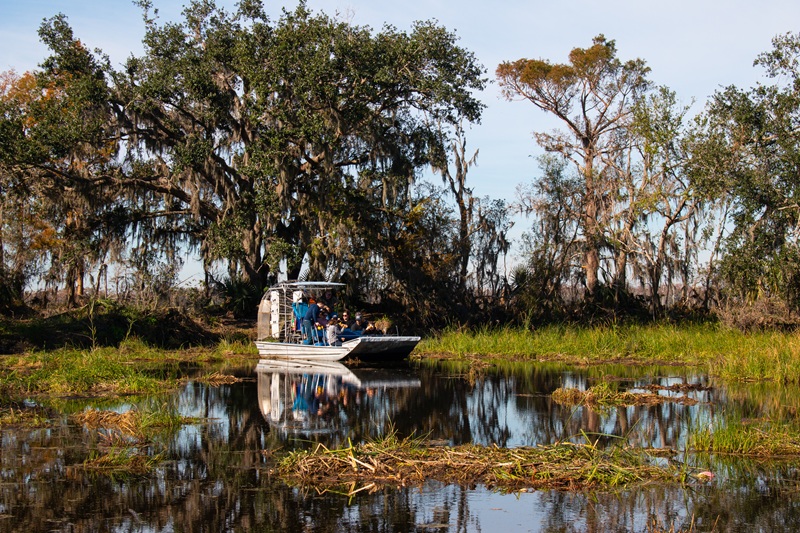
Louisiana’s wetlands provide scenery that looks almost cinematic. Towering cypress trees.
Spanish moss hanging from branches. Reflections across still water.
Sunrises and sunsets that seem designed specifically for camera lenses. Visitors love capturing those moments.
Many of those photos eventually appear on social media, where they introduce new travelers to Louisiana’s natural beauty.
In many ways, every visitor becomes an ambassador for local tourism.
A single photograph shared online can inspire future travel plans for friends and family members hundreds or even thousands of miles away.
Another reason swamp tours support tourism is that they provide a balance to urban attractions.
New Orleans is an exciting city.
There’s always something happening.
- Music fills the streets.
- Festivals fill the calendar.
- Restaurants stay busy.
The energy is part of what makes the city special.
But many visitors also appreciate opportunities to slow down for a few hours.
A swamp tour offers a different pace.
- The sounds change.
- The scenery changes.
- The atmosphere changes.
The experience becomes less about crowds and more about nature. That contrast often becomes one of the most memorable parts of a trip.
Cultural education is another benefit. Louisiana’s history is deeply connected to its waterways and wetlands.
Many communities developed around bayous, rivers, and coastal regions. Fishing, trapping, transportation, and commerce all relied heavily on these environments.
Understanding the wetlands helps visitors better understand Louisiana itself.
The landscape has influenced everything from local traditions to cuisine to regional history.
Swamp tours help tell that story.
Environmental awareness also plays a growing role.
Many visitors leave with a greater appreciation for coastal restoration efforts and wetland preservation.
The challenges facing Louisiana’s coast become much easier to understand when standing in the middle of the ecosystem itself.
The wetlands are more than scenery.
They’re part of a living environment that supports wildlife, protects communities, and contributes to the state’s economy.
At Louisiana Tour Company, one of the most rewarding parts of the business is watching visitors discover this side of Louisiana for the first time.
Some arrive expecting to see an alligator. Others arrive hoping for a relaxing boat ride.
Many leave with a much deeper appreciation for the wetlands and the role they play in the region.
The tourism industry thrives when visitors can experience multiple dimensions of a destination.
New Orleans offers incredible history, food, music, and culture.
The surrounding swamps add another layer to that experience.
They provide adventure, education, wildlife encounters, photography opportunities, and a deeper understanding of the natural world that helps shape Louisiana.
That combination continues to attract visitors year after year.
And judging by the smiles on many faces at the end of a swamp tour, the alligators seem perfectly happy to continue doing their part as unofficial tourism ambassadors.