Why Wetlands Matter: How Louisiana’s Swamps Help Protect Coastal Communities Against Flooding and Erosion
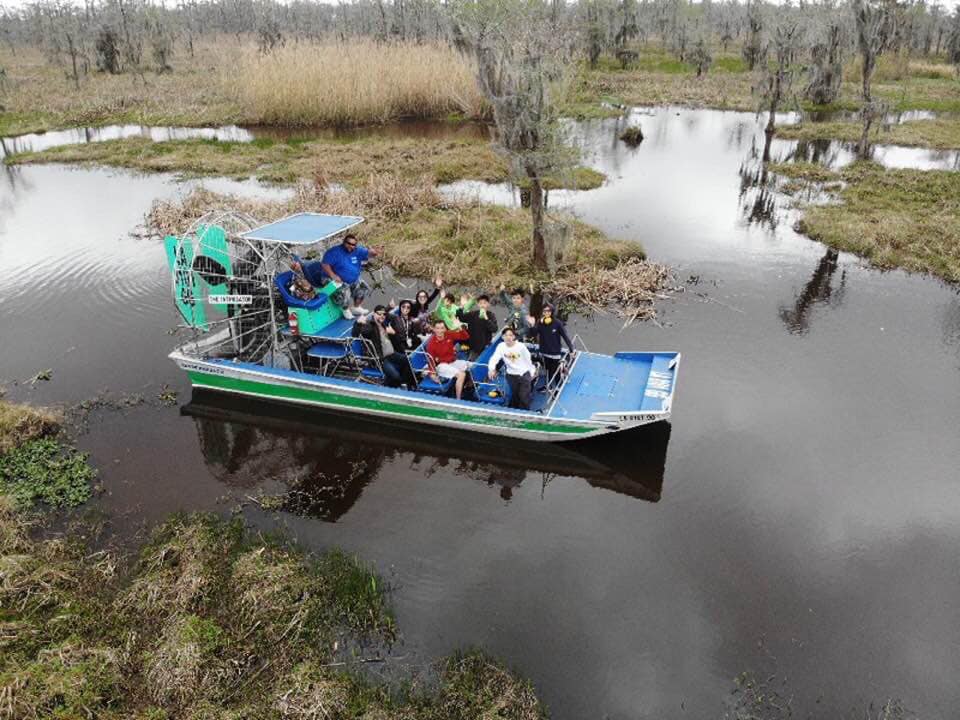
Running swamp tours in South Louisiana gives a person a front-row seat to the biggest unsung hero in the Gulf Coast: the wetlands. Most folks who step onto one of our boats think they’re just here to see alligators, moss-covered trees, and maybe a nutria or two doing whatever nutria do. But the longer I’ve worked out here, the clearer it becomes that these swamps aren’t just beautiful—they’re working harder than most people realize.
Wetlands are the Gulf Coast’s quiet protection system. They don’t make noise, they don’t brag, and they don’t send anyone a bill. They just sit there day after day, slowing floods, blocking waves, catching sediment, and keeping the coast from disappearing faster than a plate of boiled crawfish at a family reunion.
Here’s why these swamps matter more than most people think.
WETLANDS ARE BUILT-IN FLOOD MANAGERS
Anyone who has lived in Louisiana long enough knows one simple truth: water always tries to go where it shouldn’t. Rain falls, bayous rise, lakes swell, and rivers wander. Without wetlands, all of that water would head straight for neighborhoods, streets, and the occasional barbecue someone was really looking forward to.
Wetlands act like giant natural sponges. They spread water out, slow it down, and give it a place to go that isn’t someone’s front yard. When rainfall gets intense or storms roll in, the swamps absorb a huge amount of water before it ever reaches the levees or drainage systems.
Most of this happens quietly. No one sees it. But take it away, and the water shows up where it definitely isn’t welcome.
THEY REDUCE STORM SURGE—A JOB NO ONE ELSE WANTS
Storm surge is one of the biggest threats to Gulf Coast communities. When hurricanes push water inland, wetlands are the last line of defense before that surge reaches homes and businesses.
Trees, grasses, and marsh plants create resistance that slows the water. By the time the surge makes it through miles of swamp, it has lost a lot of its power.
Those cypress trees with their big knees sticking out? They’re doing more than posing for tourist photos. They help break wave energy long before it reaches the areas people depend on.
The marsh grasses that look like they’re just waving in the wind? They’re actually part of a massive natural shield.
The swamp doesn’t get enough credit for the job it does in hurricane season, but make no mistake—it’s working the whole time.
THEY PREVENT EROSION AND LAND LOSS
Louisiana loses land faster than just about anywhere in the country. Some of it slips away quietly. Some of it disappears dramatically. But wetland plants slow down that process by trapping sediment and holding the ground together.
Roots anchor the soil. Marshes catch mud flowing from the rivers. Sediment slowly rebuilds land instead of letting it wash into the Gulf.
Without wetlands, the shoreline retreats at a pace no one wants to think about. With wetlands, the land holds on longer, stronger, and more steadily.
Walk around the marsh long enough and you’ll notice something: every little blade of grass plays a part. What looks fragile is actually a powerful defense system holding Louisiana together—literally.
WETLANDS CLEAN WATER BETTER THAN ANY FILTER AT THE STORE
As water flows through the swamp, the wetlands help purify it. Plants soak up nutrients. Soil traps sediments. Microorganisms do the dirty work of breaking down pollutants.
Out here, the swamp handles water treatment naturally. No machines. No chemical plants. No flashing lights or warning alarms—unless an alligator decides to surface right next to the boat, which tends to get attention.
This filtration keeps rivers, lakes, and estuaries healthier. Healthy water supports fish, shrimp, crabs, and oysters—basically everything people in Louisiana like to eat.
THEY SUPPORT WILDLIFE THAT KEEPS THE WHOLE SYSTEM RUNNING
People love seeing wildlife on our tours—alligators sunning themselves, herons flying over the water, and turtles lined up on logs like they’re posing for a family photo. But beyond the entertainment value, these animals play important roles in the health of the ecosystem.
Alligators help control other animal populations. Birds spread seeds. Fish and crustaceans keep water systems balanced. Even the nutria—yes, even those orange-toothed lawnmowers—shape parts of the ecosystem (though sometimes a little too enthusiastically).
The wetlands are one of the most productive wildlife habitats in the country. Every creature out here is part of a chain that supports the environment inside and beyond the swamp.
THEY STORE CARBON AND HELP WITH CLIMATE IMPACTS
Wetlands hold massive amounts of carbon in their soil and plant matter. When they stay intact, that carbon stays where it is. When wetlands disappear, that carbon gets released, adding more fuel to changing climate patterns.
So in their own quiet, muddy way, the swamps also help slow the environmental changes affecting the coast.
THE CULTURE OF LOUISIANA IS ROOTED IN WETLAND LIFE
Food, music, traditions, recreation—so much of what defines Louisiana has its roots in the swamp. Generations have fished, hunted, lived, worked, celebrated, and raised families along these bayous.
Tourism plays a role in preserving that appreciation. When visitors step into the swamp for the first time and see how alive it is, something clicks. They understand that this isn’t just scenery—it’s a living system that keeps the coast functioning.
Every tour is a chance to show someone why the wetlands matter and why protecting them is a responsibility shared across communities.
FINAL THOUGHTS FROM A SWAMP GUY WHO SEES IT DAILY
The wetlands protect Louisiana in ways most people never see. They hold back water, reduce storm surge, filter the environment, support wildlife, slow erosion, and stabilize the land.
Working in the swamp has shown me that every tree, every patch of marsh, and every curve of the bayou counts. These wetlands are part of the reason coastal communities continue to stand strong despite all the challenges nature throws at them.
Understanding them is the first step. Appreciating them is the second. Protecting them—that’s what keeps Louisiana’s future steady.