
Why Louisiana Swamps Are Basically Nature’s Version of a Fully Booked Hotel
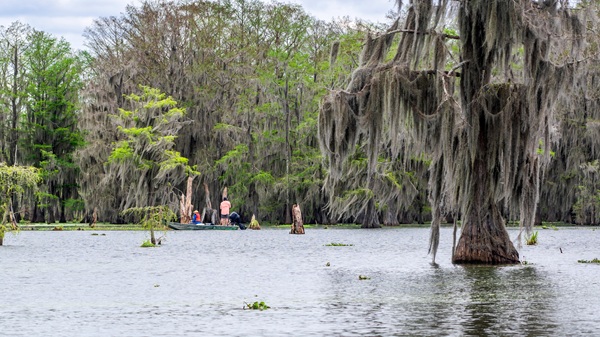
Spend enough time out in the swamps around New Orleans, and one thing becomes clear pretty quickly… nothing out there is living alone.
Every tree, every patch of water, every little stretch of marsh is occupied. Birds overhead, something moving in the water, something watching from the bank. It is less like a quiet wilderness and more like a fully booked hotel where everybody showed up at the same time and decided to stay.
There is a reason for that.
Louisiana swamps are built to support life. The combination of water, vegetation, and constant change creates an environment where a wide range of species can find what they need. Food, shelter, nesting areas… it is all there, just spread out in layers.
Start with the water.
It moves slow, sometimes barely at all. That might not look like much, but it creates the perfect setup for life to grow. Nutrients settle, plants take root, and everything starts building on top of that foundation. Fish, insects, amphibians… all of it begins in the water.
Then come the trees.
Cypress and tupelo trees rise up out of the swamp like they have been there forever, which in many cases they have. Those trees are more than just scenery. They provide structure. Branches for birds to nest, shade for animals to rest, and protection from anything trying to move in from the outside.
Look up into those branches, and there is usually something looking back.
Herons, egrets, and other wading birds treat those trees like high-rise apartments. Nesting happens above the water where predators have a harder time reaching. It is a smart setup. Safety and a good view, all in one place.
Down below, the water stays busy.
Fish move through the shallows, turtles slide off logs the second anything gets too close, and alligators sit still enough to make someone wonder if they are even real… until they are. Everything has its place, and everything seems to know exactly how to use it.
One of the most interesting things about the swamp is how it changes.
Water levels rise and fall depending on the season, rainfall, and surrounding conditions. When that happens, the entire environment adjusts. Areas that were dry become accessible, and places that were open water shift into something else.
That constant change keeps things moving.
It also keeps food sources circulating. Nutrients move through the system, feeding plant life, which in turn supports everything else. It is a cycle that repeats over and over again, and it is one of the reasons so many species can exist in the same space.
Bird activity is especially noticeable.
Some species live in the swamp year-round, while others pass through during migration. When those migratory birds show up, it is like a temporary population surge. Suddenly, there are new sounds, new movement, and a whole new layer of activity.
They stop, refuel, and keep going.
Without places like Louisiana’s swamps, that journey would look very different.
Mammals make their presence known in quieter ways.
Raccoons move along the edges, otters slide through the water, and deer step carefully through areas where footing is not always guaranteed. They are not always easy to spot, but they are there, moving through the same system as everything else.
Nothing in the swamp is wasted.
Every part of the environment serves a purpose. Fallen trees become resting spots. Plant growth becomes food. Even the water itself works as a filter, trapping sediment and helping maintain balance within the ecosystem.
It is a system that takes care of itself… as long as it is left intact.
That is one of the reasons these environments matter beyond just the wildlife.
Swamps help manage water. They absorb excess during heavy rain and release it slowly over time. That function plays a role in reducing flooding in surrounding areas. It is not something most people think about while looking out over the water, but it is happening all the same.
There is also a certain rhythm to the swamp.
It is not loud in the way a city is loud, but it is never silent. Birds calling, insects moving, water shifting… it all blends together into something steady. Spend enough time out there, and that rhythm starts to feel familiar.
Then something splashes nearby and reminds everyone that paying attention is still a good idea.
What makes Louisiana swamps stand out is not just the number of species living there. It is how everything fits together. Each part supports the next. Remove one piece, and the balance shifts.
That balance is what keeps the environment alive.
From the outside, it might look like a stretch of water and trees. Spend a little time in it, and it becomes clear that it is a fully functioning system, constantly moving, constantly adjusting, and always full.
And if it feels like something is always watching from just beyond the surface…
That is probably because something is.