Why Guided Swamp Tours Offer a Deeper View of Louisiana’s Wetlands
The Louisiana swamp has a reputation. Mysterious. Quiet. A little spooky. Occasionally blamed for every missing sock in South Louisiana. But in reality, the swamp is one of the most organized, balanced, and misunderstood ecosystems on the planet.
And it looks very different when someone explains what is actually happening.
A guided swamp tour is not about speeding through water hoping an alligator waves. It is about slowing down long enough to notice that everything is moving, communicating, and cooperating in ways most people never realize.
The water alone tells a story. Water levels rise and fall with rain, tides, and seasons. That movement controls where fish feed, where birds nest, and where reptiles travel. Without guidance, it looks like water. With guidance, it looks like a living system.
Then there are the trees. Cypress knees stick up like nature’s furniture arrangement. Spanish moss hangs like it is decorating for a very patient holiday. Every plant has a job. Some stabilize soil. Some filter water. Some provide shelter. None of them are just there for decoration.
Wildlife is the main attraction, of course. Alligators, turtles, birds, and fish appear when they feel like it. And they always feel like it more when nobody is rushing them. Knowing where to look, what signs to watch for, and how behavior changes with temperature and season makes a big difference.
Without guidance, a floating log is just a floating log. With guidance, that same log suddenly has teeth.
Guided tours also reveal how much communication happens in the swamp. Birds call to each other. Insects signal. Water moves around obstacles. Even silence usually means something is happening just out of sight.
History lives in the swamp too. Indigenous communities, fishermen, trappers, and settlers all depended on these wetlands. Routes through the swamp shaped trade, survival, and culture. That connection becomes much more meaningful when someone explains it while drifting through the same water.
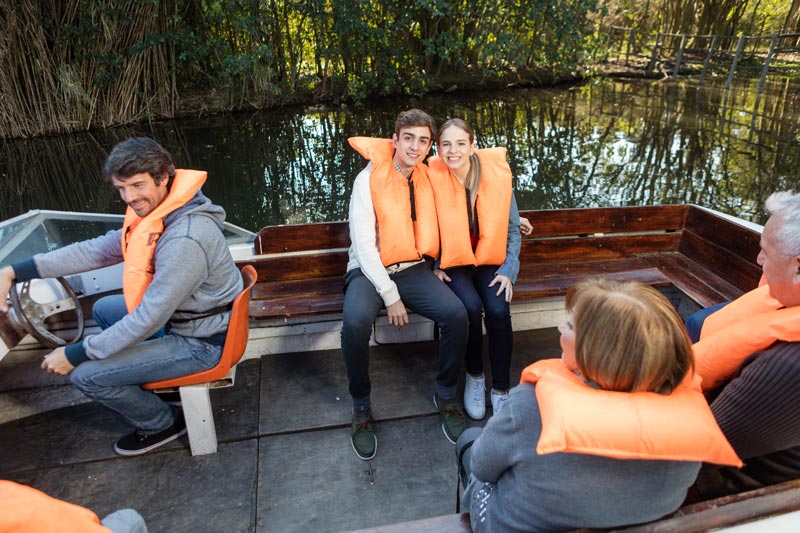
Safety is another reason guided tours matter. Swamps are beautiful, but they are not playgrounds. Submerged obstacles, changing weather, wildlife behavior, and water depth all require respect. Guidance allows exploration without turning adventure into poor decision-making.
The swamp also teaches patience. Wildlife does not perform on command. Sometimes the best moments happen after a few quiet minutes. Sometimes they happen when nobody is looking in the right direction. Guided tours create space for those moments.
Sound becomes part of the experience too. Birds, frogs, insects, wind through reeds, and water movement create a natural soundtrack that explains more than most people realize. Each sound means something. Once someone points that out, the swamp becomes a conversation.
Guided tours also show how important swamps are beyond beauty. Wetlands protect coastlines. They absorb storm surge. They filter water. They stabilize ecosystems that support communities far beyond their boundaries.
Most people never connect that quiet swamp to the safety of nearby cities. But they should.
Seasonal changes make guided tours even more interesting. Spring brings nesting. Summer brings thick vegetation. Fall introduces migration. Winter reveals clearer animal movement. The swamp never stays the same. Guided tours adapt with it.
Photography improves too. Knowing where light hits the water, where animals tend to surface, and how movement works helps visitors capture moments instead of just hoping for them.
Families especially benefit from guided experiences. Kids learn that nature is not just something in books. Questions turn into stories. Curiosity turns into respect.
And yes, guided tours correct a few myths. The swamp is not a scary monster factory. It is a carefully balanced system that simply refuses to rush.
The value of a guided swamp tour is not about entertainment. It is about connection.
Connection to environment.
Connection to history.
Connection to conservation.
When people understand what they are seeing, they care differently. They remember differently. They talk about it differently.
The swamp stops being something mysterious in the background and becomes something alive in the foreground.
And once that happens, the experience never really ends.
It simply changes how everything else looks afterward.